If you’ve ever watched your dog destroy a chew toy in under ninety seconds, you know the particular despair of realizing you just paid good money for thirty seconds of silence.
You deserve better. Your dog deserves better. And somewhere out there is a chew that can actually survive contact with those jaws.
The good news? Long-lasting dog chews aren’t a myth; you just need to know what you’re buying, why it works, and which ones are actually safe for your specific dog.
Let’s dig in.
Why “Long-Lasting” Is Trickier Than It Sounds
Here’s the thing nobody tells you at the pet store: there’s no universal “toughest chew” that works for every dog.
A chew that keeps a Chihuahua occupied for a week might vanish in one sitting with a Labrador who treats chewing as a competitive sport.
Durability is relative, and it depends on your dog’s size, jaw strength, and whether they’re a nibbler or a full-on demolition crew.
So instead of chasing a magic product, the smarter move is to understand the categories of chews and match them to your dog’s chewing style.
The Heavy Hitters: Natural Chews That Actually Last
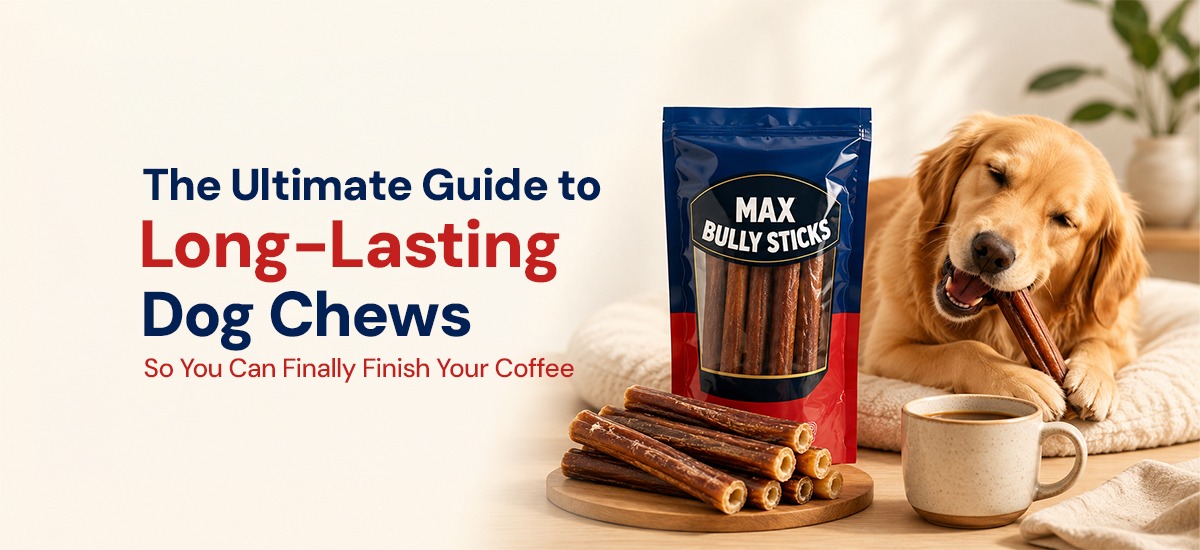
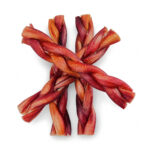
Bully sticks (the thick, braided kind)
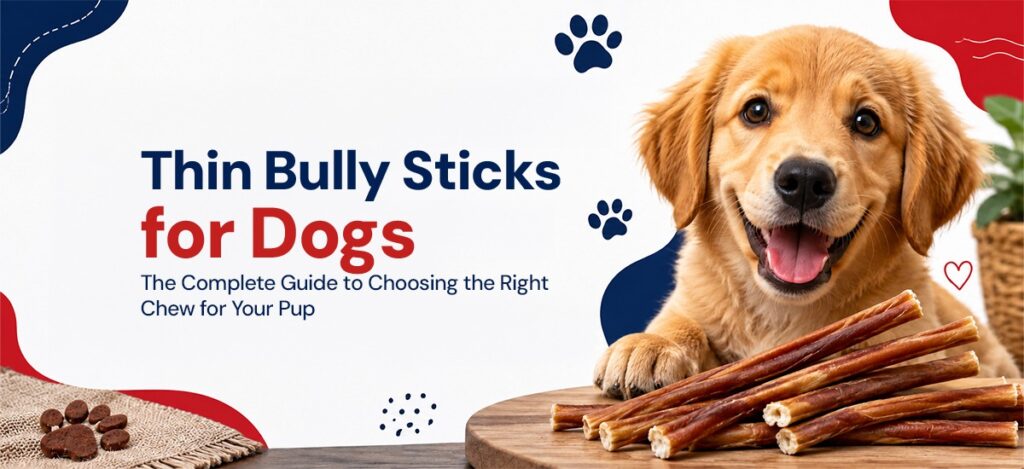
Skip the thin ones. They’re basically a snack. Go for thick or braided bully sticks, which take real effort to work through.
They’re single-ingredient, digestible, and a solid step up from anything flimsy.
Yak milk chews
Sold under names like Himalayan chews, these are dense, low-odor, and impressively hard. They can occupy a moderate-to-strong chewer for a genuinely long stretch, and when they finally get down to a small nub, you can microwave it into a puffy, edible treat, nothing wasted.
Antlers
Deer and elk antlers are about as close to indestructible as natural chews get. They don’t crumble, they don’t smell, and they last for ages.
The trade-off: their sheer hardness means very aggressive chewers occasionally crack a tooth on them, so they’re best for dogs who chew with enthusiasm rather than pure force.
Beef cheek rolls and tendons
Think of these as rawhide’s more respectable older sibling — tougher, longer-lasting, and easier on digestion.
The Reusable Route: Rubber and Synthetic Chews
If you want something that doesn’t disappear at all, rubber chews are the way to go.
Kong-style stuffable toys
These aren’t edible, but that’s the point — they last indefinitely. Stuff one with peanut butter, wet food, or kibble and freeze it, and you’ve bought yourself a solid twenty to forty minutes of focused licking and gnawing.
Nylabone (the durable line, not the flexible one)
Specifically engineered for dogs who chew like it’s their job. Skip the softer, flexible Nylabones if your dog is a serious chewer; they won’t hold up.
West Paw Toppl or Tux
Similar concept to a Kong: stuffable, durable, and reusable indefinitely, making them a good rotating option alongside natural chews.
What to Avoid (Even If It’s Cheap and Easy)
Not every “long-lasting” chew on the shelf deserves your trust.
- Rawhide softens as your dog works it, and can become a choking hazard once it turns into a gummy wad — despite the marketing, it usually doesn’t last as long as you’d expect.
- Real bones, especially cooked ones or weight-bearing bones from large animals — carry a real risk of splintering or cracking teeth.
- Anything smaller than your dog’s muzzle is a swallowing risk waiting to happen, no matter how “tough” the material is.
The lesson here is that durability isn’t the only factor. A chew that lasts a long time but poses a safety risk isn’t actually a good chew; it’s a problem with good marketing.
Matching the Chew to the Dog
Before you stock up, take an honest look at your dog’s chewing style:
- Light chewers generally do fine with softer natural chews and don’t need anything ultra-hard.
- Moderate chewers are the sweet spot for bully sticks, yak chews, and cheek rolls.
- Aggressive “power chewers” need the toughest options — antlers, heavy-duty Nylabones, or stuffed rubber toys — and even then, supervision matters once a chew gets small enough to swallow.
Size matters just as much as hardness. A chew perfectly sized for a 15-pound terrier is a choking hazard in the making for a 70-pound retriever, and vice versa.
A giant chew a small dog can’t get their jaws around just becomes a toy they push around the floor.
The Bottom Line
Long-lasting dog chews do exist. You just have to shop smart.
Go for thick bully sticks, yak milk chews, or antlers if you want something natural and durable, or lean on stuffable rubber toys like Kongs if you’d rather have a reusable option that never runs out.
Whatever you choose, size it to your dog, watch for wear, and swap it out before it becomes a hazard rather than a treat.
Because at the end of the day, the goal isn’t just buying your dog something to chew.
It’s buying yourself a little peace, a little quiet, and maybe enough time to finish that coffee while it’s still hot.
Dogs with stronger jaws may need thicker or more durable options. Explore our complete guide to long-lasting dog chews to find the right natural or reusable chew for your dog’s size and chewing style.